
Marco Rubio and the high-stakes U.S. gamble in post-Maduro Venezuela
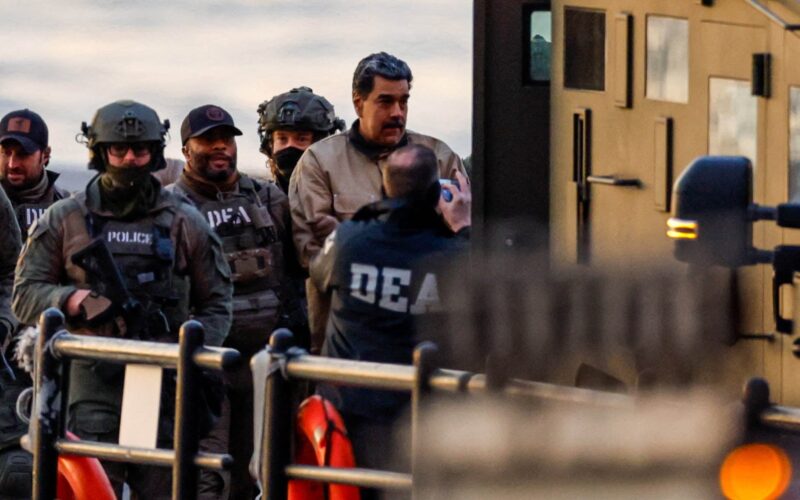
The dramatic capture of Nicolás Maduro marked a turning point in U.S.–Venezuela relations. At the center of that moment stood Marco Rubio, whose influence inside the Trump administration has reshaped Washington’s approach to Caracas and raised profound questions about what comes next for a fractured nation.
On a January night filled with symbolism and high stakes, U.S. military actions against Venezuela unfolded far from Washington’s usual hubs of command. From Mar-a-Lago, President Donald Trump monitored the raid that resulted in the capture of Nicolás Maduro, with Secretary of State and National Security Advisor Marco Rubio at his side. The moment conveyed more than a tactical maneuver; it signaled a growing concentration of authority and confidence within a tight circle of advisers who have shaped U.S. strategy toward Venezuela with notable secrecy and intensity.
For Rubio, the moment carried personal, political, and strategic weight. The son of Cuban immigrants and a politician shaped by South Florida’s exile communities, he has long viewed the Maduro government as a destabilizing force whose reach extends beyond Venezuela’s borders. Over years, his rhetoric evolved into action, culminating in a role that now places him at the forefront of defining U.S. involvement in Venezuela’s future. What remains unclear is whether that involvement will be brief and transactional or prolonged and transformative.
A career trajectory converging on Venezuela
Rubio’s rise within the Trump administration has been marked by an accumulation of responsibilities rarely held by a single official. As both top diplomat and national security advisor, he operates with a level of access that allows him to bypass traditional bureaucratic channels. Venezuela has become the clearest expression of that influence. According to officials familiar with the process, Rubio was instrumental in shaping the strategy that isolated Maduro diplomatically, tightened economic pressure, and ultimately justified military action under the banner of counter-narcotics and regional security.
This focus did not materialize instantly. Across his tenure in the Senate, Rubio repeatedly portrayed Maduro as a “narco-dictator” whose regime eroded any boundary between governmental power and criminal activity. His strategy centered on sanctions, diplomatic isolation, and demands for justice. What has shifted is the extent of control he now exercises over implementation, evolving from an advocate into someone directly steering policy results.
Trump’s announcement that Rubio would help “run” Venezuela after Maduro’s capture was intentionally vague, yet revealing. It signaled confidence in Rubio’s judgment while sidestepping details about governance, legitimacy, and duration. For allies and critics alike, the statement raised immediate concerns about how such an arrangement would function in practice and whether it implied regime change despite prior denials.
Planning behind closed doors
In the months preceding the operation, decision-making about Venezuela became concentrated within a small inner circle at the White House. Rubio worked in close coordination with Deputy Chief of Staff Stephen Miller, establishing a partnership shaped by their aligned hardline instincts. Although their official roles differed, both endorsed a forceful stance that cast Venezuela less as a diplomatic matter and more as a security risk associated with drug trafficking and migration pressures.
This collaboration reshaped internal debates. Early discussions reportedly considered Venezuela primarily through the lens of deportations and border enforcement. Over time, the argument that Maduro’s government functioned as a hub for criminal networks gained traction, reframing the issue as one of direct national interest. That shift provided the policy justification for expanded military presence in the region and strikes against suspected smuggling operations.
Many established participants were pushed to the margins during the process, with career diplomats, regional specialists, and even certain senior State Department officials often notified only once choices had already been finalized rather than being engaged in advance. Supporters claim this method curtailed leaks and sped up decision-making, while critics argue it heightened the likelihood of strategic oversights and potential legal exposure.
Issues surrounding governance and legitimacy
With Maduro removed from the scene, attention has turned to what follows. Interim leadership under figures previously aligned with the old regime complicates the narrative of liberation or democratic transition. U.S. officials have emphasized leverage rather than partnership, maintaining economic pressure—particularly through control over oil revenues—as a means of influencing behavior.
Rubio has described this approach as conditional engagement, asserting that any sanctions relief or cooperation would hinge on concrete steps that serve U.S. priorities, such as reducing migration pressures, disrupting drug trafficking operations, and constraining the reach of competing powers, while democratic reforms, though recognized as positive, seem to hold a lesser immediate priority.
Former diplomats express unease with this sequencing. Venezuela’s size, complexity, and institutional decay make governance a daunting task even under favorable conditions. Attempting to impose order without a clear framework or on-the-ground presence risks prolonging instability. The absence of a U.S. diplomatic mission further complicates coordination, accountability, and reconstruction efforts, whether focused on oil infrastructure or broader civil administration.
Rubio as the administration’s chief negotiator
In Congress, Marco Rubio has emerged as the leading figure articulating and justifying the administration’s decisions, and lawmakers characterize him as poised, assured, and highly versed in the workings of the Senate, often speaking off the cuff rather than relying on scripted notes, which lends him an air of authority over both the facts and the broader strategic landscape.
His fluency has not insulated him from reproach, as some lawmakers contend that the pre‑operation briefings minimized the chances of military engagement or a possible regime change, leaving a noticeable divide between what was promised and what occurred. Concerns over international law, national sovereignty, and future precedent persist, especially among Democrats who consider the raid a destabilizing move.
Nevertheless, many Republicans seem to find Rubio’s explanations compelling, particularly those who view Venezuela as a security threat rather than solely a diplomatic issue. For this group, Maduro’s capture is seen as a chance to reshape relations on terms more advantageous to U.S. interests.
Background and political beliefs
Observers frequently link Rubio’s fervor regarding Venezuela to his Miami upbringing, where stories of exile, authoritarianism, and displaced homelands permeate everyday political discourse, and where Cuban, Venezuelan, and Nicaraguan communities have shaped a perspective that views leftist authoritarian governments not as remote concepts but as forces exerting tangible influence on American communities.
This perspective distinguishes Rubio’s approach from more abstract ideological hawkishness. Supporters argue it grounds his policy in lived experience and moral clarity. Critics worry it narrows the range of acceptable outcomes, prioritizing confrontation over compromise and leaving little room for nuanced engagement with Venezuela’s internal dynamics.
Notably, Rubio’s stance toward the Venezuelan opposition has shifted. Once an outspoken supporter of figures such as María Corina Machado and Edmundo González, he has recently avoided committing to their role in any future government. This recalibration suggests a move away from symbolic alignment toward a more transactional assessment of who can deliver stability and cooperation.
The challenge of managing multiple fronts
Despite Trump’s confidence, the notion that Rubio can oversee Venezuela’s day-to-day affairs while managing global diplomatic responsibilities strains credibility. Former officials emphasize the need for delegation, specialized envoys, and interagency coordination. Without these structures, even a limited agenda focused on oil and security could overwhelm existing capacities.
Calls to appoint a special envoy underscore the scale of the task ahead. Rebuilding institutions, restoring basic services, and navigating internal power struggles require sustained attention and expertise. The dismantling of development agencies and the absence of experienced personnel further complicate prospects for long-term engagement.
Meanwhile, Venezuela’s interim leaders have delivered conflicting messages, denouncing the operation at one moment and suggesting collaboration the next. Rubio has emphasized that Washington will assess them based on concrete deeds instead of statements, maintaining firm pressure until clear progress is evident.
A moment of opportunity or a prolonged gamble
Supporters of the administration frame the current moment as a chance to “turn the page” in Venezuela, offering conditional cooperation as a path toward stability. Skeptics warn that without a clear exit strategy, the United States risks entanglement in a complex political landscape where leverage can quickly turn into liability.
Rubio occupies the heart of this uncertainty, with his rise embodying confidence built on steadfast loyalty and persuasive influence while also placing responsibility squarely on him. Should Venezuela regain stability and move nearer to U.S. interests, his strategy might be seen as justified. Otherwise, the effort could serve as an example of how far coercive diplomacy can go before reaching its limits.
As events keep evolving, one fact stands out: capturing Nicolás Maduro did not settle the Venezuela issue. Instead, it moved it into a new and uncertain stage, where Marco Rubio’s choices, priorities, and ability to adjust will influence not only U.S. strategy but also the direction of a nation still trying to determine its future.
This story has been revised to include further details sourced from CNN.


